
Shoulder osteoarthritis
Shoulder osteoarthritis is a degenerative joint condition characterised by the progressive wear and breakdown of protective cartilage, resulting in joint pain, stiffness, and restricted movement.
What causes shoulder osteoarthritis?
Shoulder osteoarthritis is primarily a degenerative condition, but several factors can accelerate its onset: Age-related wear and tear (Primary OA): Natural wear and erosion of cartilage over many years of routine joint use. It predominantly affects middle-aged and older adults. Post-traumatic osteoarthritis: Develops following a significant prior injury, such as a shoulder dislocation, labral tear, or bone fracture that permanently altered joint mechanics. Rotator cuff tear arthropathy: Long-standing, untreated large rotator cuff tears can cause the ball to shift out of alignment within the socket, leading to abnormal friction and severe wear on the upper socket rim. Avscular necrosis (AVN): Disruption of blood supply to the head of the humerus causes cartilage collapse and rapid joint degeneration.
Common symptoms
- Deep, aching pain within the shoulder joint that worsens with movement or joint loading
- Pain at night, making it difficult to find a comfortable sleeping position
- Progressive joint stiffness and loss of range of motion, particularly when reaching overhead or rotating the arm
- A grinding, cracking, or crunching sensation (crepitus) when moving the shoulder
- Pain when lifting moderate objects or carrying out daily personal care tasks
How is shoulder osteoarthritis diagnosed?
Diagnosing shoulder osteoarthritis involves a comprehensive clinical examination by your consultant to evaluate joint stiffness, pain triggers, muscle strength, and functional limitations.
How is it treated?
Treatment plans are tailored based on your age, activity levels, symptom severity, and the stage of cartilage degeneration revealed in your diagnostic imaging.
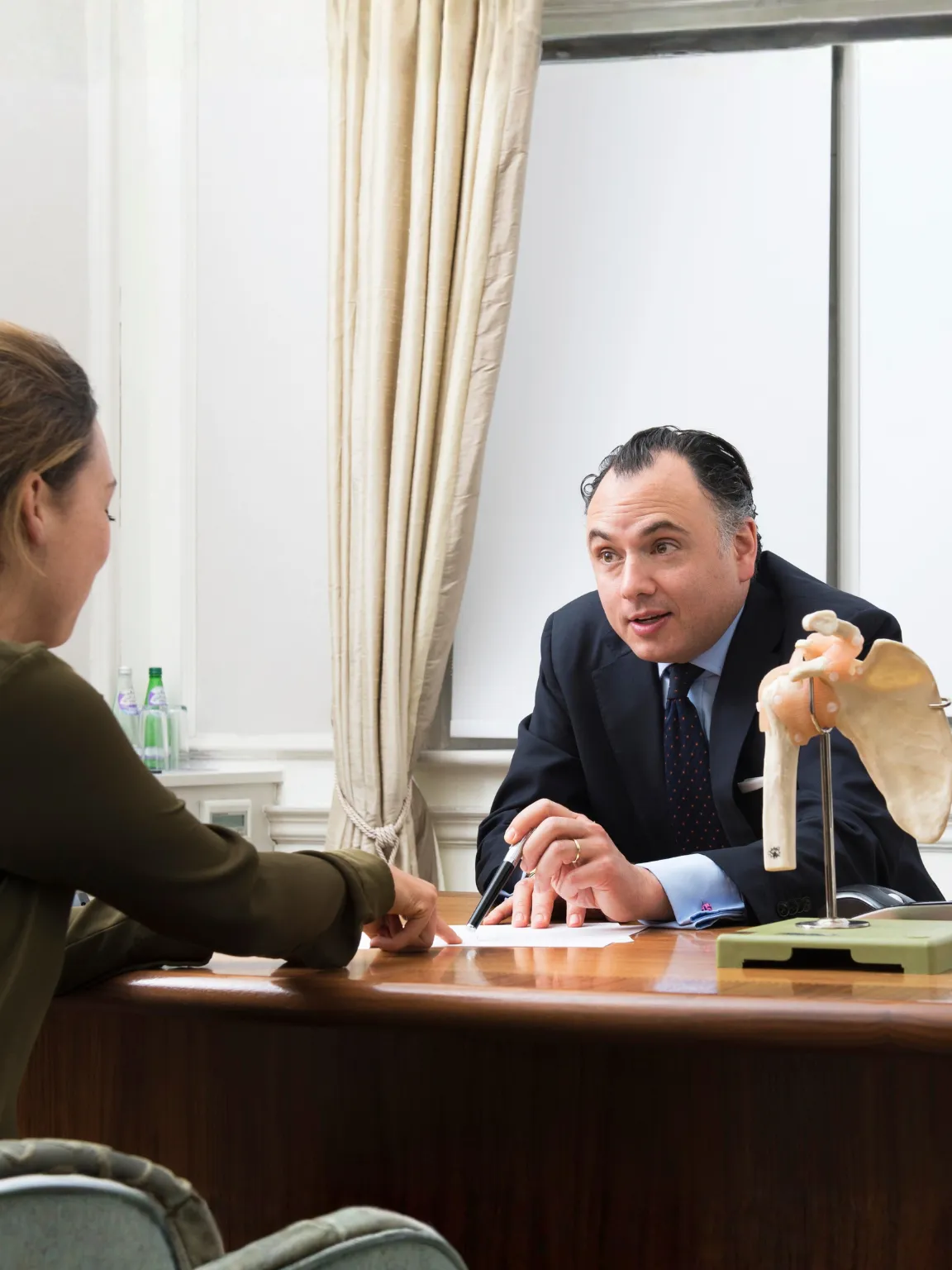
Treatment routes for shoulder osteoarthritis
In the early to moderate stages, treatment focuses on relieving pain and maintaining joint mobility without surgery:
- Activity modification: Adapting daily routines and avoiding heavy overhead loading to minimize joint strain.
- Medication: Over-the-counter or prescribed non-steroidal anti-inflammatory drugs (NSAIDs) to reduce joint inflammation and pain.
- Physical therapy: Targeted exercises to maintain shoulder girdle mobility and strengthen surrounding rotator cuff and back muscles to support the joint.
- Intra-articular injections: Steroid injections can rapidly reduce joint inflammation and pain for several months. Joint lubricant injections (hyaluronic acid) may also be offered to improve joint fluid viscosity and reduce friction.
Recovery from shoulder osteoarthritis
Initial protection and healing
Following surgical debridement or joint replacement, your arm will be supported in a sling to manage swelling and protect soft tissue repairs. Focus on pain control, applying ice, and performing gentle hand, wrist, and finger exercises. Surgical dressings must stay clean and dry until stitches are checked at 10 to 14 days.
Passive to active-assisted movement
Under physical therapy guidance, sling use is gradually phased out. Exercises progress from passive joint movements to active-assisted mobility to prevent stiffness without overloading the joint.
Active mobility and functional rehabilitation
Active unassisted arm movements are reintroduced as comfort allows. Rehabilitation focuses on strengthening the shoulder girdle, restoring functional overhead reach, and resuming light daily activities.
Advanced recovery and long-term joint function
Rehabilitation shifts toward building endurance, functional strength, and low-impact sport conditioning. Full recovery following shoulder replacement surgery typically takes 6 to 12 months.
Working with professionals and teams
Our shoulder specialists support professional athletes, sports teams, active individuals and people whose work places high demands on their shoulders. Working closely with radiologists, physiotherapists and the wider multidisciplinary team, they provide coordinated care from diagnosis through to rehabilitation, helping each person return safely to sport, work or everyday activities.
The same specialist expertise and collaborative approach are available to every patient, whatever your activity level or recovery goals.

Our Experts - Leaders in Shoulder Treatment







How to pay
We offer flexible options depending on how you choose to access care at Fortius. Whichever option you choose, we’ll help make the process clear and straightforward from the start.

Private medical insurance
If your care is covered by private medical insurance, we’ll usually invoice your insurer directly. Please check your policy in advance and request an authorisation code if your insurer requires one. You’ll be responsible for paying any policy excess or costs that aren’t covered by your insurance.

Paying for yourself
You don’t need private medical insurance to access care at Fortius. If you’re paying for your own treatment, our team will explain the costs clearly and provide a personalised quote before you decide whether to go ahead.
Find a clinic near you
Fortius Clinic London

Our 79,000 sq ft, seven-story, private hospital on Wigmore Street has 39 en-suite inpatient rooms, consultation and treatment rooms, and a physiotherapy suite.
The hospital has a high-spec imaging suite fully equipped with an MRI, CT scanner and X-ray machine. There are three state-of-the-art operating theatres, two anaesthetic rooms and a recovery bay.
Fortius Clinic London has two Mako robots for hip and knee joint replacements.
- 66 Wigmore Street W1U 2SB
- 0203 195 2442
- Outpatient times are Monday to Friday from 8.00am to 8.00pm.
- Sports & Exercise Medicine
- Snow Injuries Clinic
- Tendon Clinic
- MRI Scan
- Ultrasound
- X-Ray
- Physician services
- Rheumatology
- CT Scan
- Image guided injections
- Physiotherapy
- MAKO Robotic Joint Replacement
Fortius Clinic Wimbledon

Our Wimbledon clinic houses a state-of-the-art imaging centre with a 3T MRI and X-ray scanners, Ultrasound, seven consulting rooms, two spacious waiting areas and well equipped treatment rooms all located on one level, ensuring easy accessibility for all patients.
Our partnership with Spire St Anthony’s Hospital allows us to provide orthopaedic surgery closer to our clinic. We treat a full range of conditions and perform joint replacement surgery using the latest Mako robotic assisted technology.
The building at 22 Worple Road has steps leading up to the front entrance. If you require assistance please inform us before your arrival by calling ahead on 020 3195 2442
- 22 Worple Road SW19 4DD
- 0203 195 2442
- Outpatient times are Monday to Friday from 8.00am to 8.00pm.
- Snow Injuries Clinic
- MRI Scan
- Ultrasound
- X-Ray
Fortius Clinic Marylebone

Our Marylebone Clinic is conveniently located in the historic area between Baker Street and Marylebone High Street, just off Manchester Square, home to the iconic Wallace Collection. We have seven consulting rooms, private waiting areas on each floor, well equipped treatment rooms and diagnostic imaging.
- 17 Fitzhardinge StreetW1H 6EQ
- 020 3195 2442
- Outpatient times are Monday to Friday from 8.00am to 8.00pm.
- MRI Scan
- Ultrasound
- X-Ray
- Physician services
- Rheumatology
Fortius Clinic City
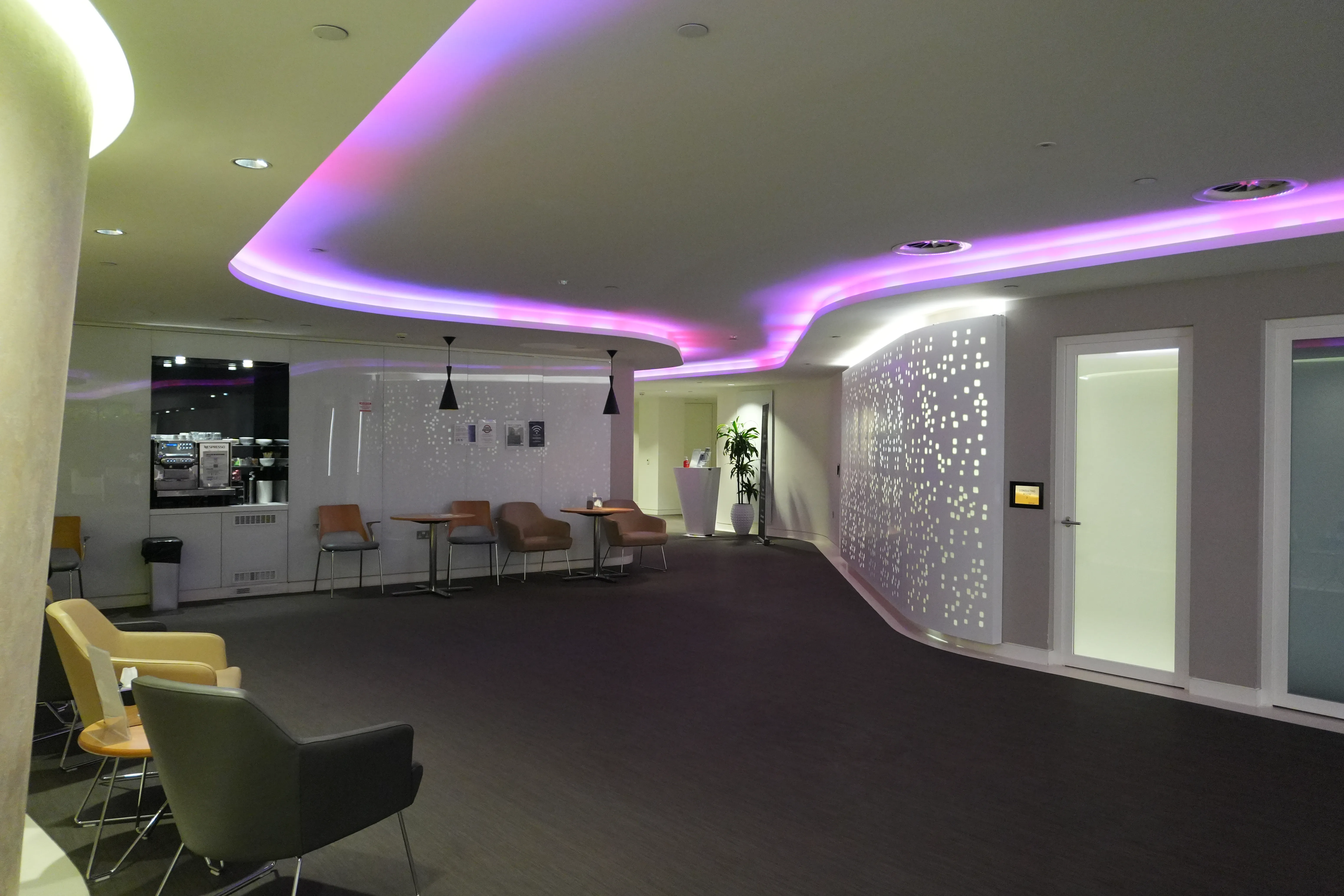
Our City Clinic is conveniently located between Bank and Monument stations, within the historic and financial heart of London. At our modern, two-floor facility we have nine consulting rooms, spacious waiting areas, well equipped treatment rooms and an imaging centre.
Explore our City Clinic with our virtual tour.
If you are travelling by Tube, our closest underground stations are Bank and Monument, exit 6 for King William Street.
Should you be travelling by car, the closest parking is a three minute drive away at NCP Car Park London Vintry Thames Exchange. If you are attending clinic on a weekday, please be aware that we are based in the congestion charge zone.
- 75 King William Street EC4N 7BE
- 0203 195 2442
- Outpatient times are Monday to Friday from 8.00am to 8.00pm.
- Snow Injuries Clinic
- Tendon Clinic
- Sports & Exercise Medicine
- MRI Scan
- Ultrasound
- X-Ray
- Physician services
- Rheumatology
1 of 4