
Acromioclavicular (AC) joint separation
An acromioclavicular (AC) joint separation, often called a shoulder separation, is an injury to the ligaments that connect the top of the shoulder blade (acromion) to the collarbone (clavicle).
Acromioclavicular (AC) joint separation overview
The AC joint sits at the very top of the shoulder, where the collarbone meets the highest point of the shoulder blade. It provides stability to the arm when performing overhead or lifting activities. An AC joint separation occurs when the ligaments supporting this joint are stretched or torn, typically caused by a direct fall onto the point of the shoulder. This injury is particularly common in contact sports (such as rugby and football), as well as among cyclists, skiers, and horse riders. Depending on the force of the impact, injuries range from mild ligament stretches to severe tears that cause the collarbone to pop upward, creating a visible bump. Fortunately, recovery outcomes are generally excellent, even after more significant separations.
Common symptoms include:
- Immediate pain and tenderness at the top of the shoulder
- Swelling and localised bruising
- Weakness when lifting or moving the arm
- A visible bump or step deformity on top of the shoulder where the collarbone has displaced upward
How is an AC joint separation diagnosed?
Diagnosing an AC joint separation involves a physical examination by your consultant to assess shoulder symmetry, pain locations, and joint stability.
If a deformity is obvious, diagnosis is straightforward. In less severe cases, your specialist will confirm the extent of ligament damage using X-rays (often taken while holding a light weight) or an MRI scan.
How is it treated?
Treatment depends on the severity (grade) of the separation, your overall activity level, and whether non-surgical measures provide adequate relief.
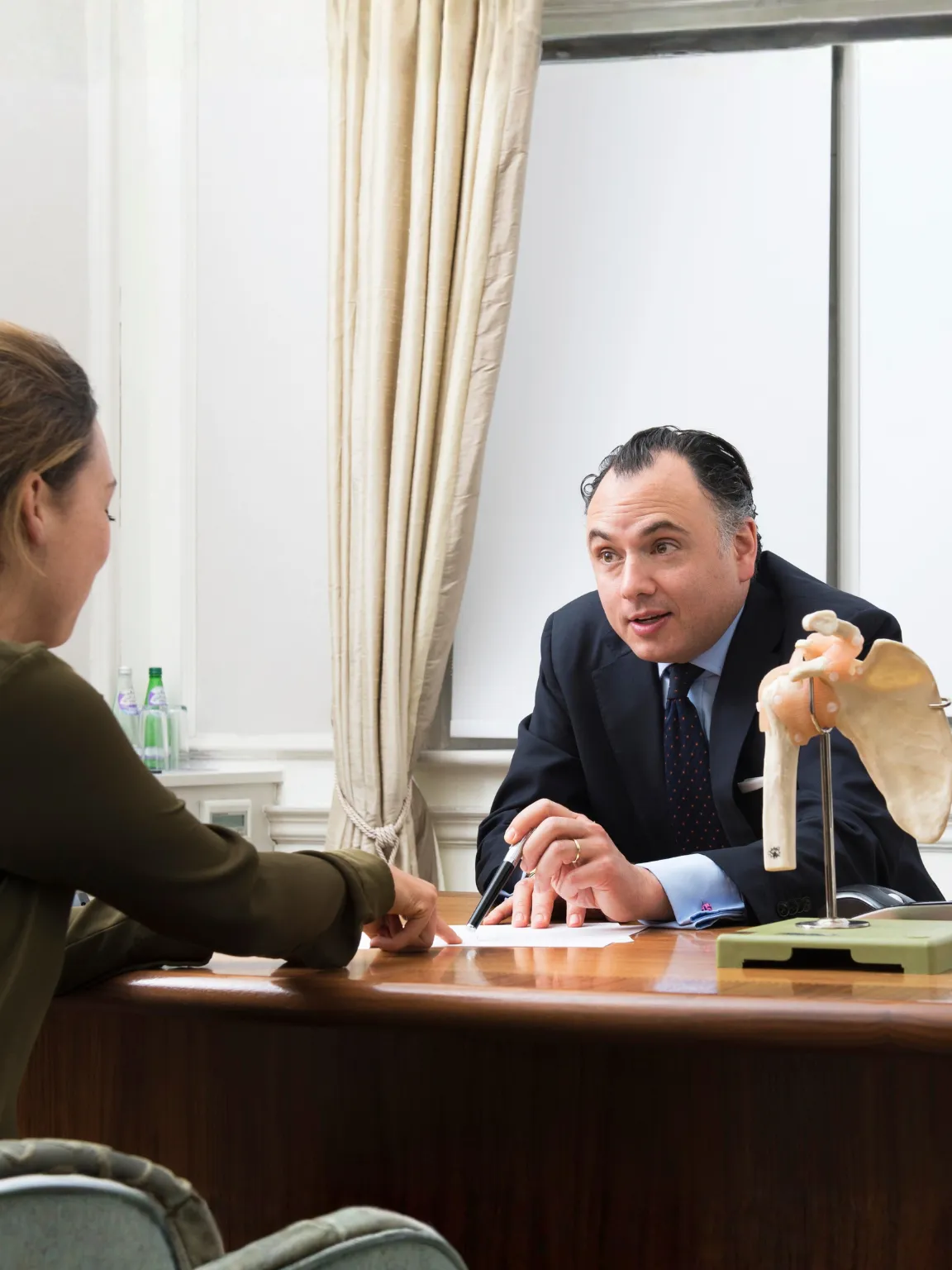
Treatment routes for Acromioclavicular (AC) joint separation
The vast majority of AC joint separations heal successfully without surgery. Treatment includes resting the arm in a sling, applying crushed ice wrapped in a damp towel for 15–20 minutes several times a day, and taking anti-inflammatory medications. Most people can return to full daily activities and sports, even if a mild physical bump remains on top of the shoulder
Recovery from AC joint separation
Rest and joint protection
Your arm will be supported in a sling for comfort. Focus on applying ice regularly to control swelling and keeping surgical dressings (if applicable) clean and dry. Gentle wrist, hand, and pendulum exercises for the shoulder are encouraged to prevent stiffness.
Restoring mobility
As acute pain settles, you will gradually discontinue the sling and begin guided range-of-motion exercises. Suture removal (if surgery was performed) occurs around 10 to 14 days. You will gradually return to using your arm for light daily activities below shoulder height.
Strengthening and overhead reach
Rehabilitation shifts toward rebuilding rotators, deltoids, and scapular stabilizing muscles. Progressive resistance exercises will help restore overhead mobility and functional strength.
Full sports clearance
Most patients return to heavy manual labor, contact sports, and overhead athletic activities during this period, once full strength, control, and stability are restored.
Working with professionals and teams
Our shoulder specialists support professional athletes, sports teams, active individuals and people whose work places high demands on their shoulders. Working closely with radiologists, physiotherapists and the wider multidisciplinary team, they provide coordinated care from diagnosis through to rehabilitation, helping each person return safely to sport, work or everyday activities.
The same specialist expertise and collaborative approach are available to every patient, whatever your activity level or recovery goals.

Our Experts - Leaders in Shoulder Treatment








How to pay
We offer flexible options depending on how you choose to access care at Fortius. Whichever option you choose, we’ll help make the process clear and straightforward from the start.
Private medical insurance
If your care is covered by private medical insurance, we’ll usually invoice your insurer directly. Please check your policy in advance and request an authorisation code if your insurer requires one. You’ll be responsible for paying any policy excess or costs that aren’t covered by your insurance.

Paying for yourself
You don’t need private medical insurance to access care at Fortius. If you’re paying for your own treatment, our team will explain the costs clearly and provide a personalised quote before you decide whether to go ahead.