
Dupuytren’s contracture
Specialist fracture care
Clear guidance from the start
Your specialist will diagnose your break and explain what comes next.
A detailed assessment
Understanding your injury
Imaging can help your specialist plan the most appropriate treatment for you.
Support through recovery
Helping you move forward
Specialist hand therapy can help you gradually regain comfortable movement.
What is Dupuytren’s contracture?
Dupuytren’s contracture develops when tissue beneath the skin of your palm gradually becomes thicker and tighter. This can create firm lumps and tight bands of tissue that pull one or more fingers towards your palm, making them harder to straighten. The word ‘contracture’ describes this loss of movement as the finger becomes fixed in a bent position. Dupuytren’s contracture most often affects the ring and little fingers and usually develops slowly over months or years. It can affect one or both hands.
What causes Dupuytren’s contracture?
The exact cause is unknown. Dupuytren’s contracture often runs in families and is more common with age. It also occurs more often in men and in people with Northern European ancestry.
There are also links with:
- Diabetes
- Epilepsy
- Smoking
- Drinking large amounts of alcohol
What are the symptoms of Dupuytren’s contracture?
The changes typically happen gradually. You may notice:
- Small, firm lumps in the palm, called nodules, which can feel tender at first
- Dimples or ridges developing in the skin of your palm
- Tight bands of tissue, sometimes called cords, forming beneath the skin
- One or more fingers beginning to bend towards the palm, making it harder to straighten them or use your hand comfortably
As the fingers become more bent, everyday activities, such as putting your hand into a pocket or holding larger objects, can become more difficult.
How is Dupuytren’s contracture diagnosed?
Your specialist will ask how your hand has changed and how it’s affecting you. They’ll examine your palm, feel for any lumps or tight bands of tissue and see how well you can straighten your fingers.
They may also measure your fingers’ movement and record areas of change to get a clear starting point. They can compare it at future appointments to see if your hand changes over time.
How is Dupuytren’s contracture treated?
You don’t always need treatment right away. Dupuytren’s contracture can develop slowly over many years, so if you can still straighten your fingers and use your hand easily, your specialist might suggest keeping an eye on it for now.
If the condition progresses and starts making everyday activities more challenging, treatment may help your finger straighten and make your hand easier to use. Your specialist will discuss the options with you and explain what may be suitable.

Treatment routes for Dupuytren’s contracture
Your treatment will depend on how far your finger has bent and how much it’s affecting your daily hand use.
If your finger still moves easily and you can manage everyday tasks without a problem, your specialist might recommend keeping an eye on any changes rather than undergoing treatment.
For some people, a needle procedure (needle fasciotomy) may be an option. Your hand is first numbed with local anaesthetic so you don’t feel pain in the area. Then your specialist uses a fine needle to cut the tight band of tissue pulling your finger down.
This can help the finger straighten without open surgery, and recovery is usually quicker than after an operation. However, Dupuytren’s is more likely to return after this procedure than after surgery.
Recovery goals after Dupuytren’s contracture treatment
Phase 1 goals:
Keep the wound protected and manage any swelling as your hand begins to heal Start gently moving your fingers as advised to keep them flexible and prevent stiffness
Phase 2 goals:
Gradually use your hand for more everyday tasks as it becomes more comfortable Keep working on bending and straightening your fingers, with support from a hand therapist if needed
Phase 3 goals:
Build up strength and confidence as you return to more demanding tasks Work towards your usual activities, including sport or physical work, when your hand is ready
Working with Hand and Wrist professionals and teams
Our hand and wrist specialists support professional athletes, sports teams, active individuals and people whose work places high demands on their hands and wrists. Working closely with radiologists, physiotherapists and the wider multidisciplinary team, they provide coordinated care from diagnosis through to rehabilitation, helping each person return safely to sport, work or everyday activities.
The same specialist expertise and collaborative approach are available to every patient, whatever your activity level or recovery goals.

Our Experts - Leaders in Hand and Wrist treatment









How to pay
We offer flexible options depending on how you choose to access care at Fortius. Whichever option you choose, we’ll help make the process clear and straightforward from the start.
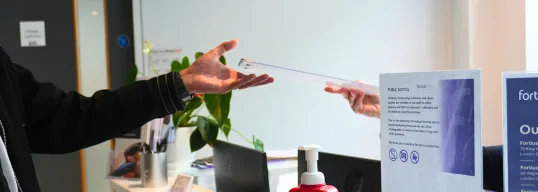
Private medical insurance
If your care is covered by private medical insurance, we’ll usually invoice your insurer directly. Please check your policy in advance and request an authorisation code if your insurer requires one. You’ll be responsible for paying any policy excess or costs that aren’t covered by your insurance.

Paying for yourself
You don’t need private medical insurance to access care at Fortius. If you’re paying for your own treatment, our team will explain the costs clearly and provide a personalised quote before you decide whether to go ahead.