
Complex Chest Injuries
Overview of complex chest wall injuries
What causes complex chest wall injuries?
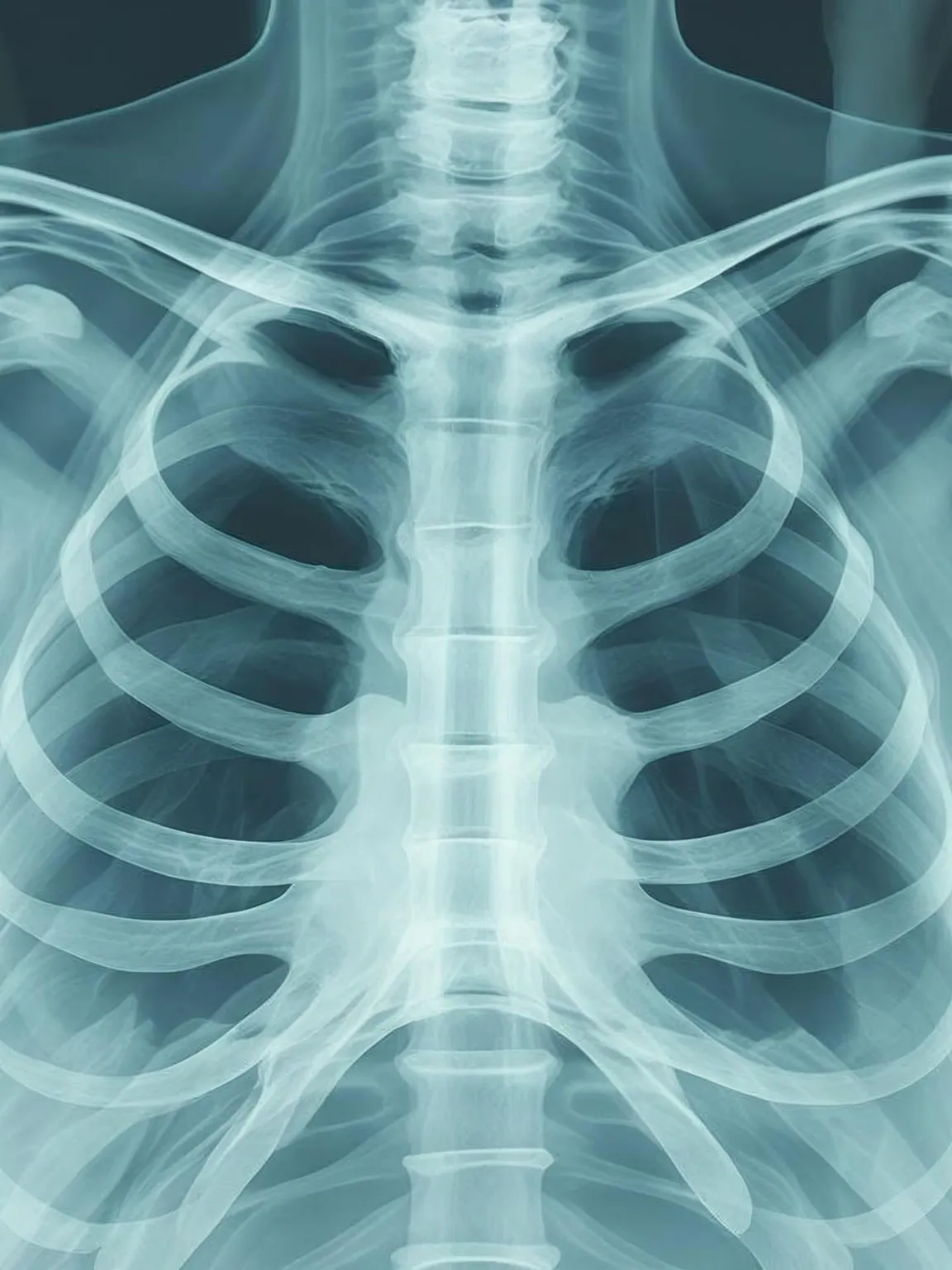
Your chest wall is made up of the ribs, breastbone (sternum), spine, cartilage, joints, ligaments, tendons and muscles. Together, these structures protect the organs inside your chest and allow your rib cage to move as you breathe.
Complex chest wall injuries can affect the places where the ribs, cartilage, and breastbone connect. These include:
- The joint where the upper and lower parts of the breastbone meet (the manubriosternal joint)
- The joints where the upper ribs meet the breastbone (the costosternal joints)
- The areas where the ribs meet the cartilage at the front of the chest (the costochondral junctions)
- The lower edge of the rib cage (the costal margin or costal arch)
- The small, pointed tip at the bottom of the breastbone (the xiphisternum)
These areas can be injured by a direct blow to the chest, a fall, a sporting injury, or a sudden twisting movement. They can also be injured during a road traffic collision, when the chest is suddenly pushed forwards and backwards against a seat belt.
These injuries are easily missed. Cartilage does not show up on an ordinary X-ray, and the pain is often put down to a pulled muscle. If you were told nothing was broken but the pain has not settled, it is worth having the area assessed properly.
Sometimes, symptoms develop gradually because a joint or the surrounding tissue has become irritated or inflamed. Repeated strain, certain exercises or changes in weight can also make some areas of the chest wall more sensitive.
During your assessment, your consultant will listen to how your symptoms started and consider which part of your chest wall may be affected.
What are the symptoms of a complex chest wall injury?
Symptoms will depend on where the injury is and how severe it is. You may notice:
- Pain around the ribs or breastbone
- Tenderness when the area is touched
- Pain when taking a deep breath, coughing or sneezing
- Pain when twisting, bending, lifting or exercising
- Swelling, warmth or inflammation
- A lump, raised area or visible change in shape
- Clicking, popping or slipping sensations
- A feeling that part of the rib cage is moving more than it should
- Pain that develops gradually or becomes worse over time
- Discomfort during abdominal exercises
Some people feel pain straight away after an injury. For others, symptoms build gradually over several days or weeks.
Chest pain can have several possible causes. Call 999 if you have sudden chest pain or discomfort that does not go away, particularly if you also have difficulty breathing, sweating, nausea, or pain spreading to your arms, back, neck or jaw. These could be signs of a heart attack and need urgent medical attention.
How are complex chest wall injuries diagnosed?
Your consultant will begin by listening to how your symptoms started and understanding how they are affecting your breathing, movement or everyday activities.
They’ll gently examine your chest wall and check for tenderness, swelling, bruising or unusual movement. They may also look for any visible changes in the position of your ribs or breastbone.
You may be asked to take a deep breath, cough or complete certain movements. This can help your consultant understand where the pain is coming from and which part of the chest wall may be affected. You may also need a scan.
An MRI scan or dynamic ultrasound scan may be recommended if your symptoms are thought to be caused by inflammation, damage to the cartilage or unusual movement in the ribs. A moving ultrasound allows the area to be examined while you breathe or change position. A CT scan may be recommended after an injury or if your consultant thinks a rib fracture or joint has moved out of place.
Your consultant will explain why any scans are needed and talk you through the results, so you understand what they mean for your care.
How are complex chest wall injuries treated?
Treatment will depend on where your injury is, how severe it is and whether the chest wall remains stable.
Many chest wall injuries improve with rest, changes to your activities and suitable pain relief. Physiotherapy or a gradual exercise programme may also help you restore movement and rebuild strength.
If part of the chest wall has moved out of place, remains unstable or hasn’t healed properly, surgery may be considered.
Treatment routes for complex chest wall injuries
The right approach will depend on the type of injury and the impact it has on your life.
Treatment often begins with simple steps to reduce pain and give the injured area time to heal. You may be advised to avoid exercise, heavy lifting or movements that make your symptoms worse for a short period.
Your personalised treatment plan may also include:
- Pain relief or anti-inflammatory medicine, where appropriate
- Physiotherapy to improve movement and rebuild strength
- A gentle exercise programme that progresses at a pace that feels manageable
- Advice on posture, breathing and how to adapt your activities
- A steroid injection to reduce inflammation in some cases
Your care team will work alongside you and let you know when it is safe to gradually increase your activity levels.
Recovery goals after a complex chest wall injury
Phase 1 goals:
Protect the injured area while it begins to heal Manage pain, swelling and inflammation Maintain comfortable breathing Avoid activities that place too much strain on the chest wall Keep moving gently, as advised by your care team
Phase 2 goals:
Gradually restore comfortable movement Improve movement through the chest, shoulders and upper body Rebuild strength in the muscles that support the chest wall Return to light everyday activities
Phase 3 goals:
Continue rebuilding strength and confidence Gradually return to physically demanding work, exercise, or daily activities such as lifting, carrying, or caring for children Restore movements needed for hobbies, fitness routines, or recreational activities Return to higher-impact or contact activities when your care team confirms it is safe Many people can return to their usual everyday activities within around three months. Your recovery may be quicker or take longer depending on the type of injury and treatment you have had.
Working with professionals and teams
Our consultants support professional athletes, sports teams and active individuals with the assessment and treatment of chest wall injuries. Working closely with physiotherapists, strength and conditioning specialists and the wider care team, they develop personalised treatment plans that support a safe return to sport or everyday activities.
The same specialist expertise and collaborative approach are available to every patient, whatever your activity level or goals.

Our Experts - Leaders in Chest treatment

How to pay
We offer flexible options depending on how you choose to access care at Fortius. Whichever option you choose, we’ll help make the process clear and straightforward from the start.

Private medical insurance
If your care is covered by private medical insurance, we’ll usually invoice your insurer directly. Please check your policy in advance and request an authorisation code if your insurer requires one. You’ll be responsible for paying any policy excess or costs that aren’t covered by your insurance.

Paying for yourself
You don’t need private medical insurance to access care at Fortius. If you’re paying for your own treatment, our team will explain the costs clearly and provide a personalised quote before you decide whether to go ahead.