
Radiofrequency nerve ablation (RFA)
Radiofrequency nerve ablation (also known as radiofrequency neurotomy or rhizotomy) is a specialised, minimally invasive procedure that uses thermal energy to disrupt nerve transmission.
Radiofrequency nerve ablation overview
Radiofrequency nerve ablation (RFA) delivers targeted heat generated by high-frequency radio waves to precise sensory nerves. Heating a small section of nerve tissue creates a temporary lesion that stops the nerve from sending pain signals back to the brain. Because the procedure targets purely sensory nerve branches that supply specific spinal or pelvic joints, it does not affect strength, sensation, or movement in your arms or legs.
Types of radiofrequency ablation
- Medial branch neurotomy: Targets the tiny medial branch nerves that transmit pain signals from the facet joints (the small articulating joints along the back of the neck and spine).
- Lateral branch neurotomy: Targets the lateral branch nerves carrying pain signals from the sacroiliac (SI) joints (the joints connecting the lower spine to the pelvis).
What conditions can be treated?
RFA is primarily recommended for persistent joint-mediated pain that has failed to improve with conservative management:
- Facet joint arthritis and pain: Chronic neck (cervical), mid-back (thoracic), or lower back (lumbar) pain aggravated by twisting or bending backward.
- Sacroiliac joint dysfunction: Chronic lower back, buttock, or hip pain arising from SI joint inflammation or hypermobility.
- Spondylosis: Degenerative arthritis of the spine causing localised, persistent back stiffness and ache.
- Cervicogenic headaches: Persistent headaches originating from arthritic upper cervical facet joints.
What does the procedure involve?
Radiofrequency ablation is performed as a day-case procedure in a specialised treatment room or operating theatre. You will be able to return home the same day.
Before the procedure (Diagnostic nerve blocks)
Before undergoing RFA, you will have one or two diagnostic nerve block injections (using local anaesthetic). This confirms that your pain is genuinely originating from specific facet or sacroiliac joints. If the diagnostic block provides temporary but significant pain relief, your consultant will confirm that you are a suitable candidate for radiofrequency ablation.
During the procedure
- Preparation and sedation: You will lie comfortably face down on an X-ray table. A local anaesthetic is applied to numb the skin over your back or neck. A mild sedative is often administered so you remain calm and relaxed, though awake enough to respond.
- Precision needle placement: Using live X-ray guidance (fluoroscopy), the specialist inserts fine, specialised needles into the exact location of the target medial or lateral branch nerves.
- Nerve location verification: A tiny microelectrode is passed through the needle. Small electric stimulation tests are performed, producing a mild tingling or muscle-twitching sensation. This confirms the needle is precisely positioned on the target sensory nerve and safely away from major motor nerves.
- Thermal ablation: Local anaesthetic is injected through the needle to numb the nerve, followed by a radiofrequency current passed through the electrode tip. The heat (typically 80°C for 60 to 90 seconds) creates a small heat lesion on the nerve tissue.
- Dressing: The needle is removed, and a small sterile dressing is applied over the puncture site.
The procedure generally takes 30 to 60 minutes, depending on the number of nerve sites being treated.
Is it painful?
The procedure is designed to be as comfortable as possible. You may feel a brief sting when local anaesthetic is injected into the skin, and a mild pressure or localized ache when the probe is positioned and activated.
The local anaesthetic administered prior to thermal ablation ensures that heating the nerve tissue is not painful. Post-procedure soreness is common, but it can be easily managed with rest and simple painkillers.
What are the risks?
Radiofrequency nerve ablation is a safe, routinely performed intervention. Complications are rare, but potential risks include:
- Post-procedure sunburn-like pain or neuritis: Temporary localised skin tenderness, muscle soreness, or nerve irritation that can last for 1 to 3 weeks before settling.
- Temporary leg numbness or weakness: Caused by local anaesthetic spreading to nearby motor nerves during the procedure; this resolves within a few hours.
- Incomplete pain relief: RFA provides substantial relief for most patients, but occasionally a nerve may not be fully ablated.
- Localised infection or bleeding: Minor risk at the needle insertion sites (less than 1 in 1,000 cases).
- Allergic reaction: Minor reactions to antiseptic solutions, contrast dye, or medications used.
Your specialist will discuss all potential risks with you in detail during your consultation.

Recovery and post-procedure care for radiofrequency nerve ablation
You must arrange for a responsible adult to drive you home following sedation and local anaesthetic administration.
Rest comfortably at home. Avoid driving, operating machinery, drinking alcohol, or making important decisions for 24 hours. Apply an ice pack (crushed and wrapped in a damp towel) to the back or neck for 15 minutes at a time to ease localized soreness.
Over-the-counter anti-inflammatory medications (such as ibuprofen) or paracetamol can be taken to manage temporary muscle soreness.
You may return to routine, light daily activities after 24 to 48 hours, avoiding heavy lifting, strenuous exertion, or long travel journeys for 3 to 5 days.
Working with foot and ankle professionals and teams
Our foot and ankle specialists support professional athletes, sports teams, active individuals and people whose work places high demands on their feet and ankles. Working closely with radiologists, physiotherapists and the wider multidisciplinary team, they provide coordinated care from diagnosis through to rehabilitation, helping each person return safely to sport, work or everyday activities.
The same specialist expertise and collaborative approach are available to every patient, whatever your activity level or recovery goals.

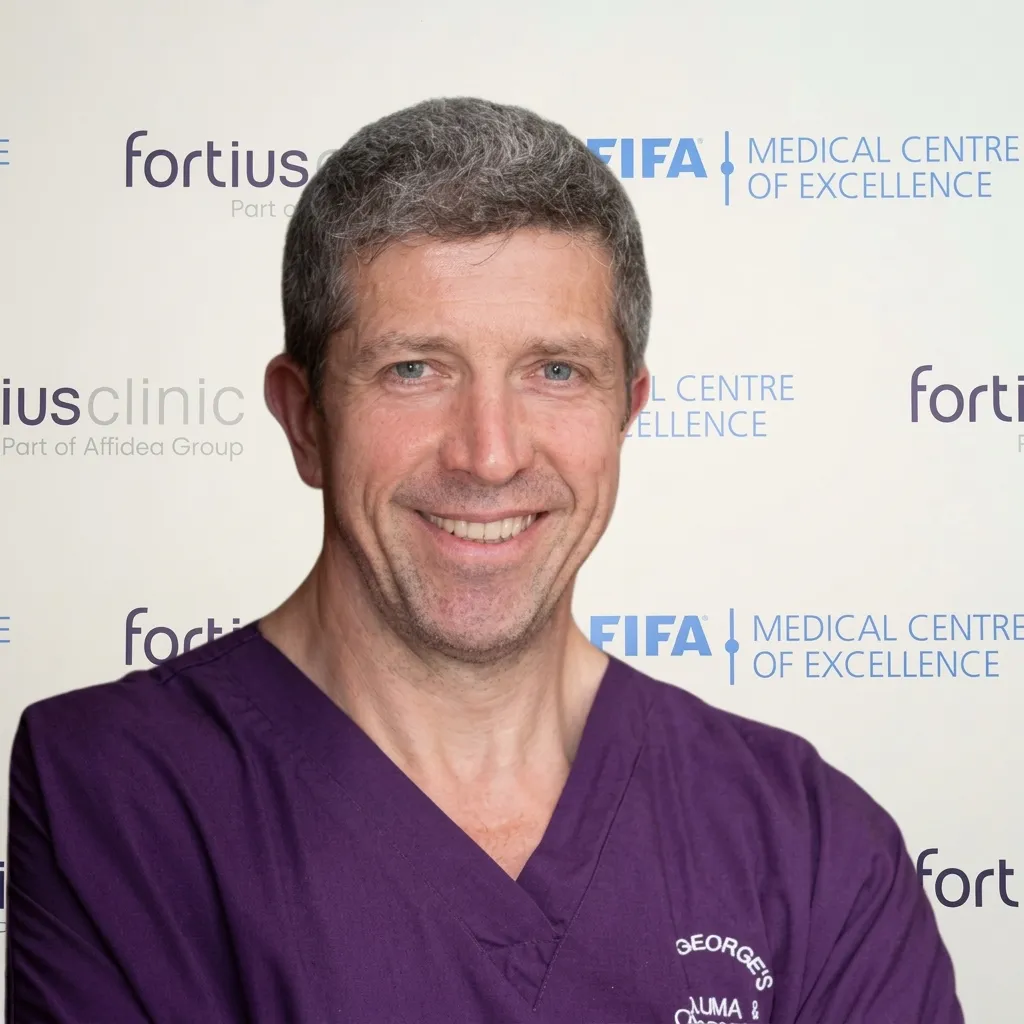
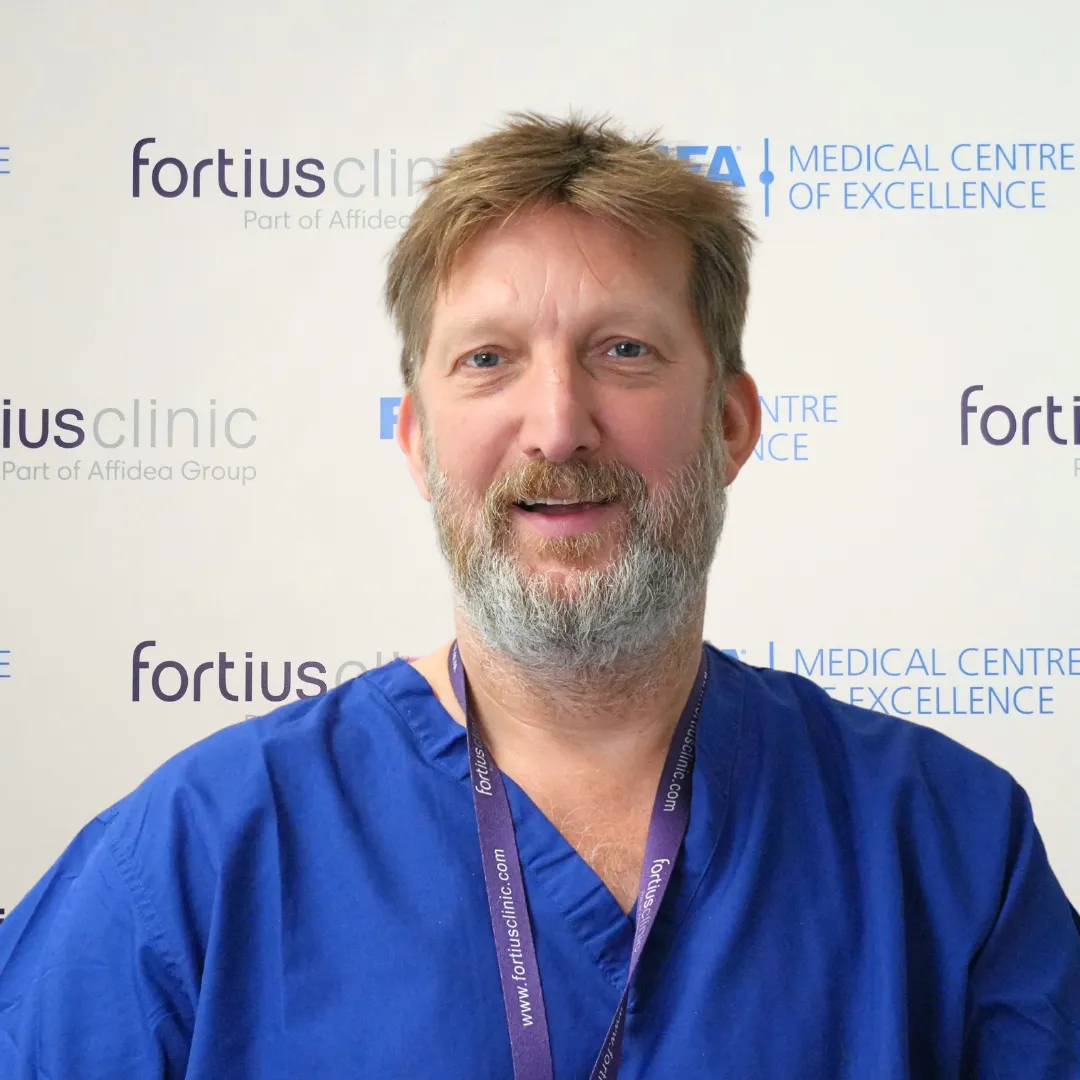
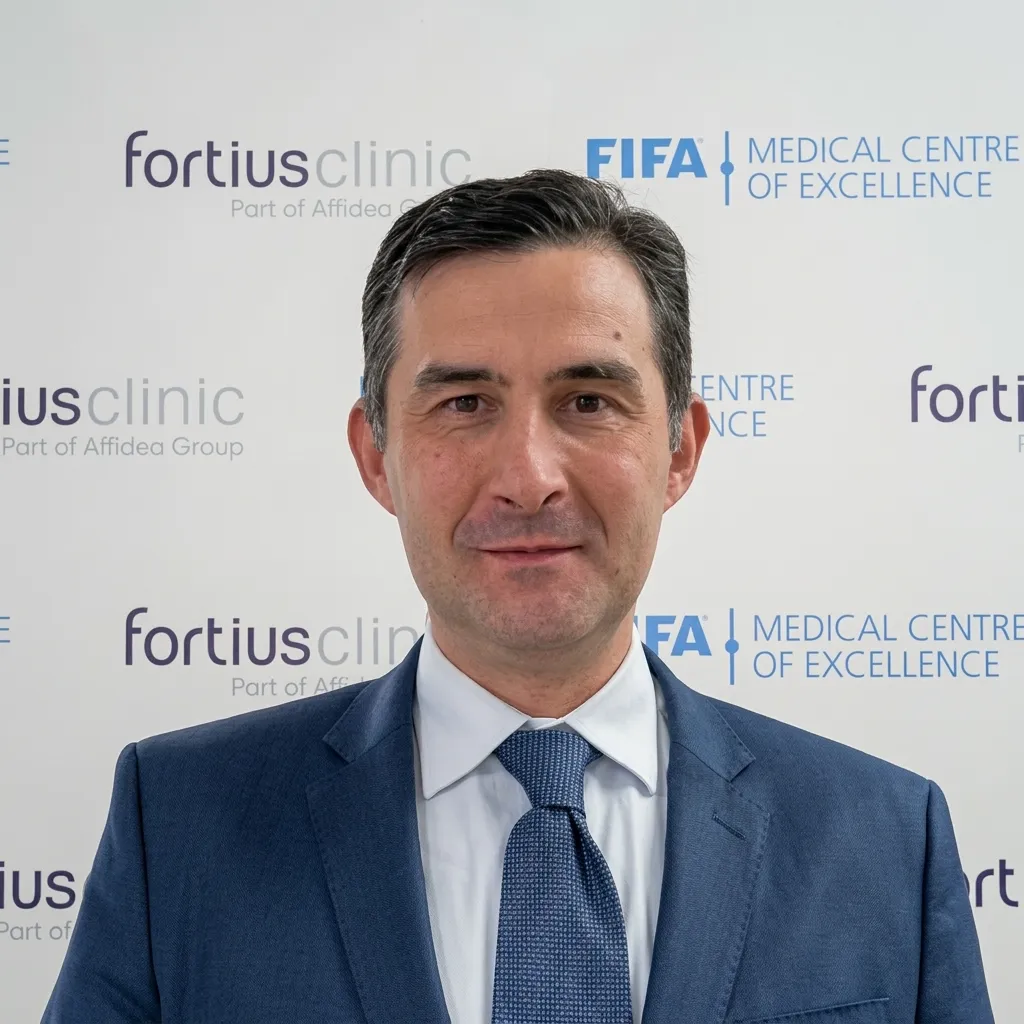
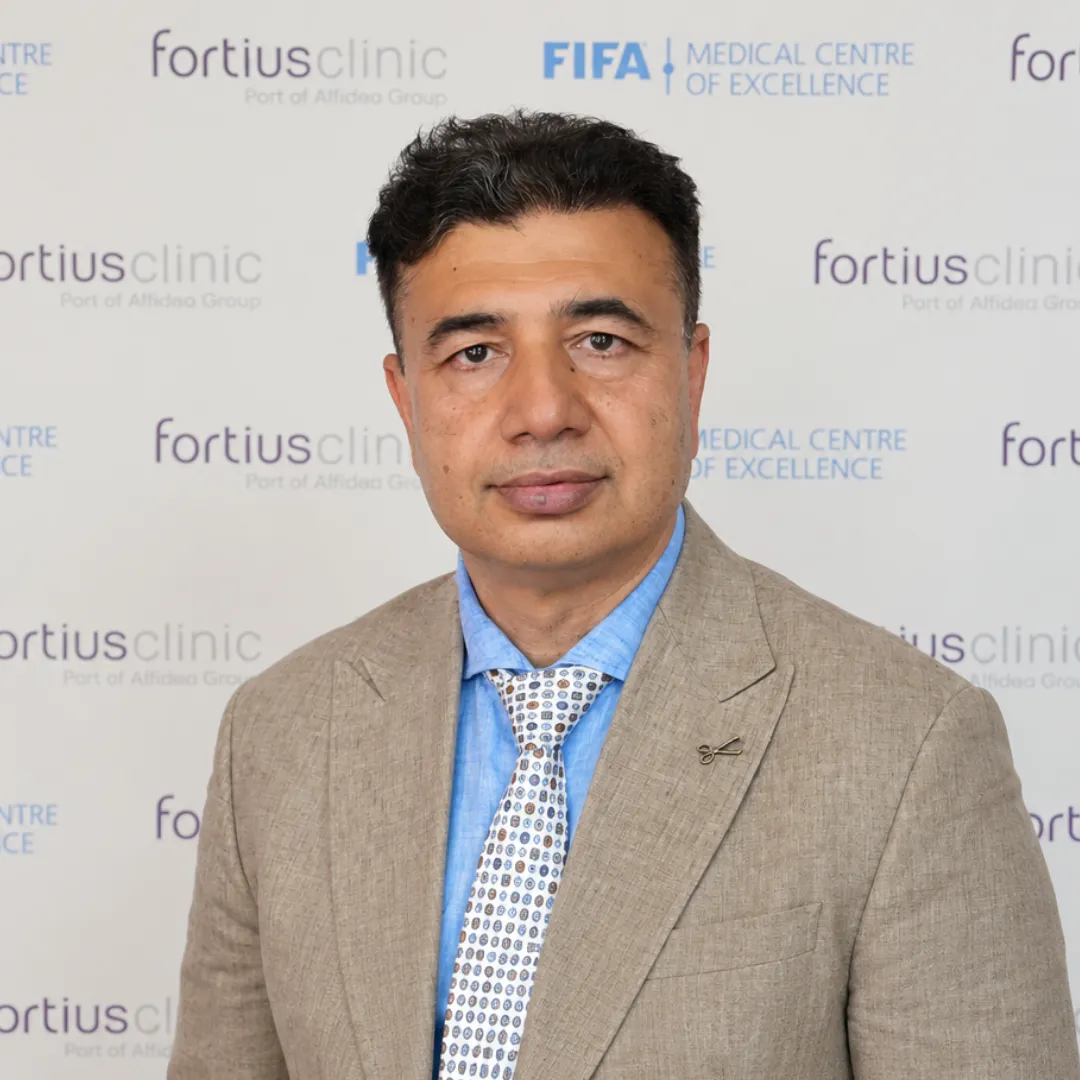
Our Experts - Leaders in Spine treatment







How to pay
We offer flexible options depending on how you choose to access care at Fortius. Whichever option you choose, we’ll help make the process clear and straightforward from the start.
Private medical insurance
If your care is covered by private medical insurance, we’ll usually invoice your insurer directly. Please check your policy in advance and request an authorisation code if your insurer requires one. You’ll be responsible for paying any policy excess or costs that aren’t covered by your insurance.

Paying for yourself
You don’t need private medical insurance to access care at Fortius. If you’re paying for your own treatment, our team will explain the costs clearly and provide a personalised quote before you decide whether to go ahead.
Achilles tendon rupture repair FAQs
You must be out of your cast or boot and able to control the vehicle safely, including performing an emergency stop without pain or hesitation. This often takes at least 10 weeks, but you should ask your specialist and check that your insurer is happy for you to drive.
This depends on your job and how you travel to work. You may be able to return to a desk-based role after around four weeks if you can keep your foot raised. A physical job may require 12–16 weeks away from work.
Returning to sport usually takes around six to nine months. Your physiotherapist will help you rebuild calf strength, balance and control before you return safely.
Find a clinic near you
Fortius Clinic London

Our 79,000 sq ft, seven-story, private hospital on Wigmore Street has 39 en-suite inpatient rooms, consultation and treatment rooms, and a physiotherapy suite.
The hospital has a high-spec imaging suite fully equipped with an MRI, CT scanner and X-ray machine. There are three state-of-the-art operating theatres, two anaesthetic rooms and a recovery bay.
Fortius Clinic London has two Mako robots for hip and knee joint replacements.
- 66 Wigmore Street W1U 2SB
- 0203 195 2442
- Outpatient times are Monday to Friday from 8.00am to 8.00pm.
- Sports & Exercise Medicine
- Snow Injuries Clinic
- Tendon Clinic
- MRI Scan
- Ultrasound
- X-Ray
- Physician services
- Rheumatology
- CT Scan
- Image guided injections
- Physiotherapy
- MAKO Robotic Joint Replacement
Fortius Clinic City
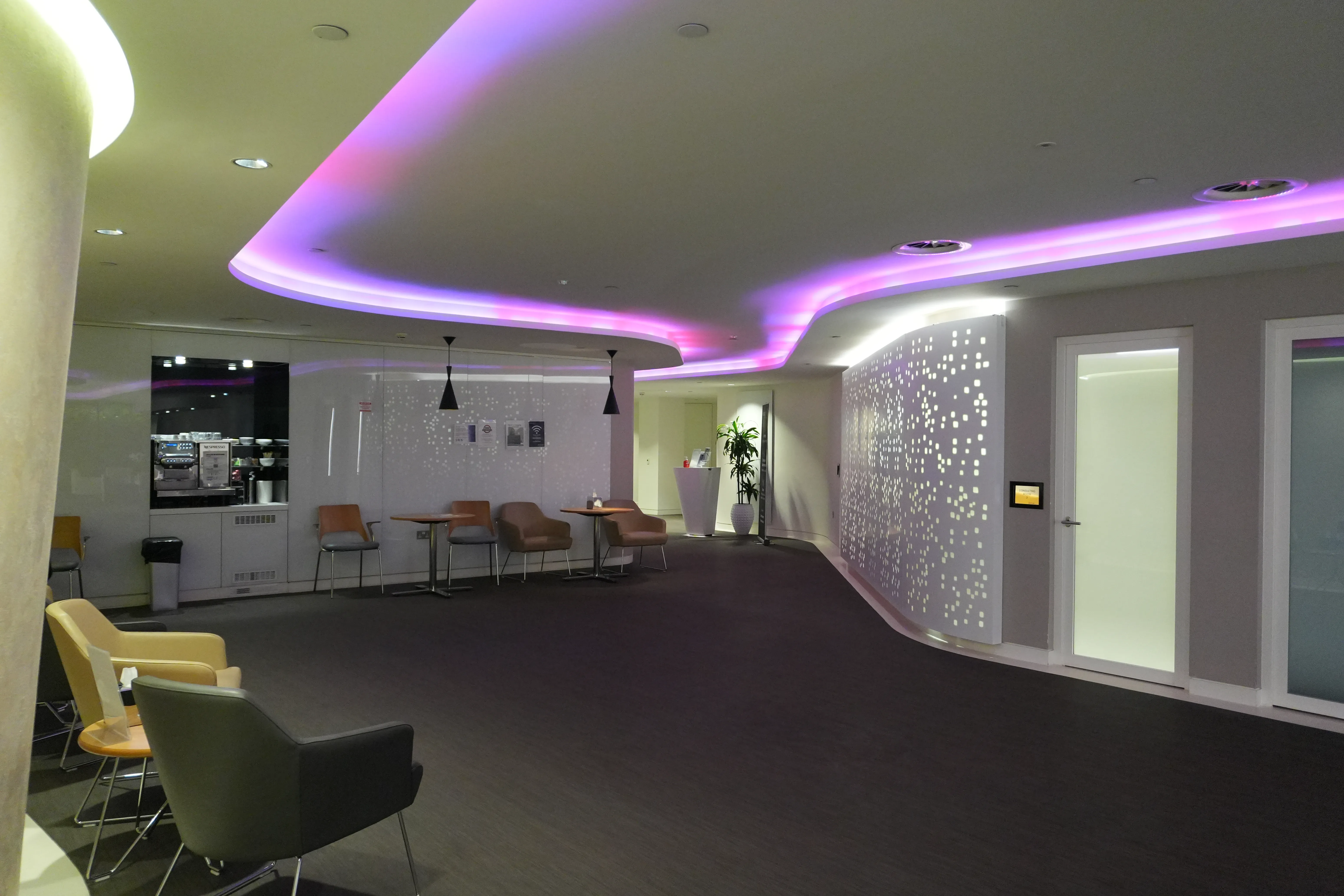
Our City Clinic is conveniently located between Bank and Monument stations, within the historic and financial heart of London. At our modern, two-floor facility we have nine consulting rooms, spacious waiting areas, well equipped treatment rooms and an imaging centre.
Explore our City Clinic with our virtual tour.
If you are travelling by Tube, our closest underground stations are Bank and Monument, exit 6 for King William Street.
Should you be travelling by car, the closest parking is a three minute drive away at NCP Car Park London Vintry Thames Exchange. If you are attending clinic on a weekday, please be aware that we are based in the congestion charge zone.
- 75 King William Street EC4N 7BE
- 0203 195 2442
- Outpatient times are Monday to Friday from 8.00am to 8.00pm.
- Snow Injuries Clinic
- Tendon Clinic
- Sports & Exercise Medicine
- MRI Scan
- Ultrasound
- X-Ray
- Physician services
- Rheumatology
Fortius Clinic Wimbledon
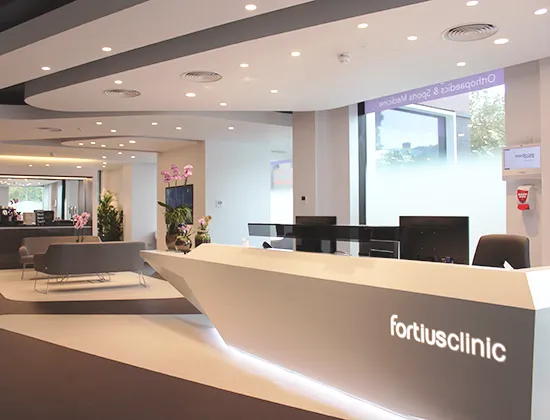
Our Wimbledon clinic houses a state-of-the-art imaging centre with a 3T MRI and X-ray scanners, Ultrasound, seven consulting rooms, two spacious waiting areas and well equipped treatment rooms all located on one level, ensuring easy accessibility for all patients.
Our partnership with Spire St Anthony’s Hospital allows us to provide orthopaedic surgery closer to our clinic. We treat a full range of conditions and perform joint replacement surgery using the latest Mako robotic assisted technology.
The building at 22 Worple Road has steps leading up to the front entrance. If you require assistance please inform us before your arrival by calling ahead on 020 3195 2442
- 22 Worple Road SW19 4DD
- 0203 195 2442
- Outpatient times are Monday to Friday from 8.00am to 8.00pm.
- Snow Injuries Clinic
- MRI Scan
- Ultrasound
- X-Ray
Fortius Clinic Marylebone
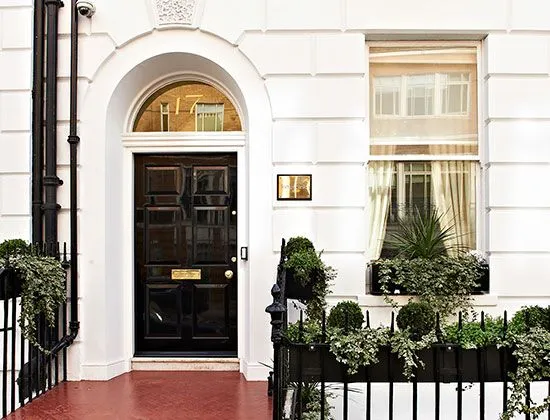
Our Marylebone Clinic is conveniently located in the historic area between Baker Street and Marylebone High Street, just off Manchester Square, home to the iconic Wallace Collection. We have seven consulting rooms, private waiting areas on each floor, well equipped treatment rooms and diagnostic imaging.
- 17 Fitzhardinge StreetW1H 6EQ
- 020 3195 2442
- Outpatient times are Monday to Friday from 8.00am to 8.00pm.
- MRI Scan
- Ultrasound
- X-Ray
- Physician services
- Rheumatology
1 of 4