
Extracorporeal shockwave therapy (ESWT)
Extracorporeal shockwave therapy (ESWT) is an established, non-invasive treatment that uses targeted acoustic sound waves to stimulate healing in chronic tendon, soft tissue, and bone conditions.
ESWT overview
Extracorporeal shockwave therapy (ESWT) is an evidence-based alternative to surgery for persistent musculoskeletal disorders. It is typically recommended when conservative measures, such as rest, ice, routine physical therapy, and anti-inflammatory medications, have failed to deliver lasting pain relief. By applying high-energy acoustic impulses directly to the affected tissue, ESWT helps reboot the body's natural healing mechanisms, bridge chronic inflammation gaps, and reduce persistent pain. If shockwave therapy proves unsuccessful, surgical intervention is generally considered the next step.
How does shockwave therapy work?
ESWT works through two main physiological mechanisms:
- Pain reduction (Hyperstimulation analgesia): The rapid sound wave impulses overstimulate local nerve endings, reducing the quantity of nerve fibers that transmit pain signals to the brain and producing immediate and long-term pain relief.
- Tissue regeneration and vascularization: The mechanical energy creates micro-trauma at a cellular level. This triggers the body's healing response, stimulating collagen production and promoting neovascularisation (the formation of new microscopic blood vessels) to improve blood supply, oxygenation, and tissue repair in chronic, poorly-vascularised tendons.
Common conditions treated with ESWT
ESWT is widely used across specialist orthopaedic and sports medicine clinics to treat conditions including:
- Plantar fasciitis and heel spurs: Chronic pain on the underside of the heel and foot arch.
- Achilles tendinopathy: Mid-portion or insertional inflammation and degeneration of the Achilles tendon.
- Tennis elbow (Lateral epicondylitis) & Golfer’s elbow (Medial epicondylitis): Persistent tendon pain on the outer or inner elbow.
- Calcific tendonitis of the shoulder: Painful calcium deposits within the rotator cuff tendons.
- Patellar tendinopathy (Jumper’s knee): Chronic pain at the base of the kneecap.
- Greater trochanteric pain syndrome (Hip bursitis/tendinopathy): Pain along the outer hip.
- Bone healing disorders: Delayed-union or non-union fractures, as well as stubborn stress fractures that have failed to fuse naturally.
How is treatment carried out?
Shockwave therapy is performed as a fast, out-patient procedure in the clinic setting, requiring no local anaesthetic, admission, or prolonged downtime.
During the session
- Locating the target area: Your consultant or specialist physiotherapist cleans the skin and palpates the precise area of maximum tenderness to ensure accurate placement.
- Applying ultrasound gel: A small amount of coupling gel is applied to the skin over the target site to facilitate the smooth transfer of acoustic waves.
- Delivering shockwaves: A specialized hand-held probe is pressed gently against the skin. The device delivers rapid acoustic pulses into the underlying target tissue.
- Duration and frequency: Each treatment session typically lasts between 5 to 15 minutes (delivering roughly 1,500 to 3,000 shockwave pulses per session).
A standard treatment protocol usually involves 3 to 5 weekly sessions, depending on your consultant’s assessment and the chronicity of your condition.
Is it painful?
ESWT does not require local anaesthetic. During the procedure, you will feel a rapid tapping or thumping sensation from the probe.
While the treatment can be uncomfortable or mildly painful, especially over bony prominences or highly inflamed tendons, your practitioner can easily adjust the energy level and pulse frequency to keep discomfort tolerable. Taking standard painkillers (such as paracetamol) prior to your appointment can help manage any minor discomfort.
Important note on painkillers: Avoid taking non-steroidal anti-inflammatory drugs (NSAIDs, such as ibuprofen or naproxen) immediately before or during your shockwave treatment course, as these can interfere with the body's natural inflammatory healing process triggered by ESWT.
What are the risks?
Shockwave therapy is a remarkably safe, non-invasive procedure with minimal side effects. Potential minor complications include:
- Temporary reddening or bruising: Transient skin redness, mild bruising, or minor localized swelling at the application site.
- Post-treatment tenderness: A temporary ache or heightened soreness for 24 to 48 hours following a session.
- Skin numbness or tingling: Transient alteration in skin sensation around the treated area, which rapidly resolves.
Who should avoid ESWT (Contraindications)?
ESWT is generally not recommended for individuals who:
- Are pregnant.
- Have an active infection or open wound over the treatment site.
- Have a blood clotting disorder or take major blood-thinning medications (e.g., warfarin).
- Have received a steroid injection into the target area within the previous 6 weeks.
- Have a cardiac pacemaker or major nerve/blood vessel structures directly over the target treatment zone.
Your specialist will review your complete medical history to ensure ESWT is entirely safe for you.
Recovery and rehabilitation from ESWT
Rest from high-impact sports, running, heavy lifting, or aggressive stretching for 48 hours following each session to allow the tissue to respond to the shockwave stimulus.
If you experience temporary post-treatment soreness, apply ice wrapped in a damp towel for 15 minutes or take paracetamol. Avoid NSAIDs.
ESWT works best when combined with a structured physical therapy program. Tendon-loading exercises (such as eccentric loading or heavy slow resistance training) are typically reintroduced between sessions to remodel the healing tissue.
While some patients experience immediate pain reduction due to nerve numbing, significant tissue healing and lasting functional improvement generally take 8 to 12 weeks following the final shockwave session.
Working with foot and ankle professionals and teams
Our foot and ankle specialists support professional athletes, sports teams, active individuals and people whose work places high demands on their feet and ankles. Working closely with radiologists, physiotherapists and the wider multidisciplinary team, they provide coordinated care from diagnosis through to rehabilitation, helping each person return safely to sport, work or everyday activities.
The same specialist expertise and collaborative approach are available to every patient, whatever your activity level or recovery goals.

Our Experts - Leaders in Foot and Ankle treatment

How to pay
We offer flexible options depending on how you choose to access care at Fortius. Whichever option you choose, we’ll help make the process clear and straightforward from the start.
Private medical insurance
If your care is covered by private medical insurance, we’ll usually invoice your insurer directly. Please check your policy in advance and request an authorisation code if your insurer requires one. You’ll be responsible for paying any policy excess or costs that aren’t covered by your insurance.

Paying for yourself
You don’t need private medical insurance to access care at Fortius. If you’re paying for your own treatment, our team will explain the costs clearly and provide a personalised quote before you decide whether to go ahead.
Achilles tendon rupture repair FAQs
You must be out of your cast or boot and able to control the vehicle safely, including performing an emergency stop without pain or hesitation. This often takes at least 10 weeks, but you should ask your specialist and check that your insurer is happy for you to drive.
This depends on your job and how you travel to work. You may be able to return to a desk-based role after around four weeks if you can keep your foot raised. A physical job may require 12–16 weeks away from work.
Returning to sport usually takes around six to nine months. Your physiotherapist will help you rebuild calf strength, balance and control before you return safely.
Find a clinic near you
Fortius Clinic London

Our 79,000 sq ft, seven-story, private hospital on Wigmore Street has 39 en-suite inpatient rooms, consultation and treatment rooms, and a physiotherapy suite.
The hospital has a high-spec imaging suite fully equipped with an MRI, CT scanner and X-ray machine. There are three state-of-the-art operating theatres, two anaesthetic rooms and a recovery bay.
Fortius Clinic London has two Mako robots for hip and knee joint replacements.
- 66 Wigmore Street W1U 2SB
- 0203 195 2442
- Outpatient times are Monday to Friday from 8.00am to 8.00pm.
- Sports & Exercise Medicine
- Snow Injuries Clinic
- Tendon Clinic
- MRI Scan
- Ultrasound
- X-Ray
- Physician services
- Rheumatology
- CT Scan
- Image guided injections
- Physiotherapy
- MAKO Robotic Joint Replacement
Fortius Clinic City
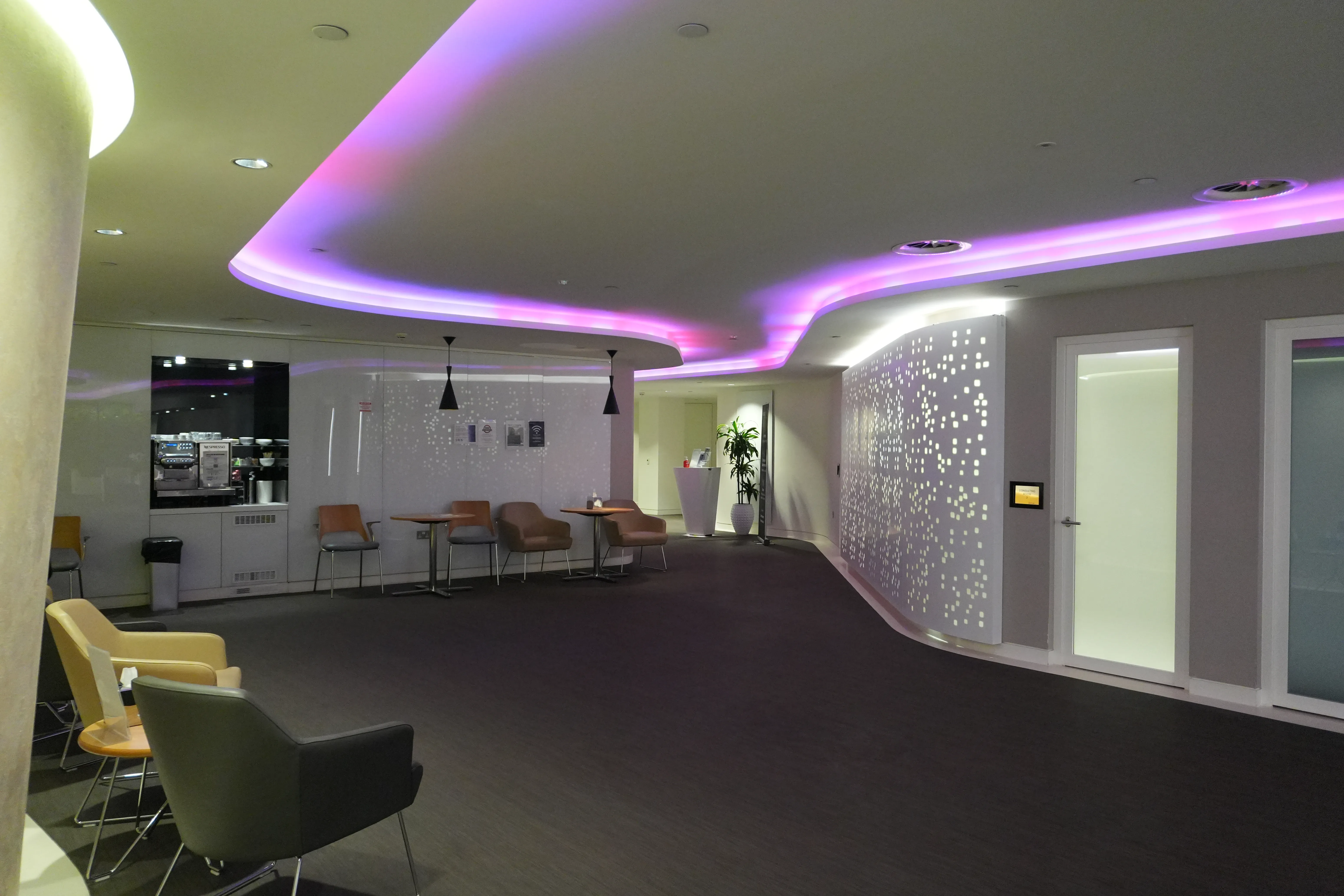
Our City Clinic is conveniently located between Bank and Monument stations, within the historic and financial heart of London. At our modern, two-floor facility we have nine consulting rooms, spacious waiting areas, well equipped treatment rooms and an imaging centre.
Explore our City Clinic with our virtual tour.
If you are travelling by Tube, our closest underground stations are Bank and Monument, exit 6 for King William Street.
Should you be travelling by car, the closest parking is a three minute drive away at NCP Car Park London Vintry Thames Exchange. If you are attending clinic on a weekday, please be aware that we are based in the congestion charge zone.
- 75 King William Street EC4N 7BE
- 0203 195 2442
- Outpatient times are Monday to Friday from 8.00am to 8.00pm.
- Snow Injuries Clinic
- Tendon Clinic
- Sports & Exercise Medicine
- MRI Scan
- Ultrasound
- X-Ray
- Physician services
- Rheumatology
Fortius Clinic Wimbledon
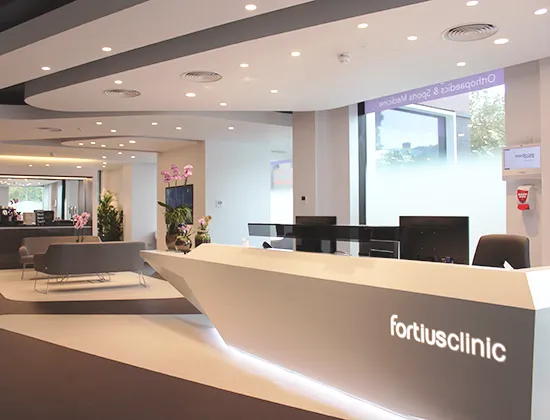
Our Wimbledon clinic houses a state-of-the-art imaging centre with a 3T MRI and X-ray scanners, Ultrasound, seven consulting rooms, two spacious waiting areas and well equipped treatment rooms all located on one level, ensuring easy accessibility for all patients.
Our partnership with Spire St Anthony’s Hospital allows us to provide orthopaedic surgery closer to our clinic. We treat a full range of conditions and perform joint replacement surgery using the latest Mako robotic assisted technology.
The building at 22 Worple Road has steps leading up to the front entrance. If you require assistance please inform us before your arrival by calling ahead on 020 3195 2442
- 22 Worple Road SW19 4DD
- 0203 195 2442
- Outpatient times are Monday to Friday from 8.00am to 8.00pm.
- Snow Injuries Clinic
- MRI Scan
- Ultrasound
- X-Ray
Fortius Clinic Marylebone

Our Marylebone Clinic is conveniently located in the historic area between Baker Street and Marylebone High Street, just off Manchester Square, home to the iconic Wallace Collection. We have seven consulting rooms, private waiting areas on each floor, well equipped treatment rooms and diagnostic imaging.
- 17 Fitzhardinge StreetW1H 6EQ
- 020 3195 2442
- Outpatient times are Monday to Friday from 8.00am to 8.00pm.
- MRI Scan
- Ultrasound
- X-Ray
- Physician services
- Rheumatology
1 of 4